The bathroom packs more plumbing into less space than any room in the house — supply, drainage and venting stacked behind tile and inside walls — and its failures are correspondingly sneaky: the toilet that runs all night, the tub drain that weeps into the ceiling below, the faucet drip that has simply become the room's background music. This service handles the room whole, from the shut-off to the showerhead.

Most bathroom trouble is wear on small parts with outsized consequences. A toilet's flapper and fill valve age in the tank's chlorinated water until the seal sulks — and a running toilet can pass more water than the household uses on purpose. Cartridges in faucets and shower valves wear until they drip or refuse to balance temperature. Wax rings under toilets dry and crack, and the leak they allow is invisible until the floor around the base softens.
The second family of faults is hidden drainage: tub and shower drains that leak only when the fixture is used, traveling down to stain the ceiling below — blamed on roofs, on upstairs neighbors, on anything but the drain joint quietly opening under load. Bathrooms reward plumbers who test fixture by fixture instead of guessing by symptom.
This service covers the working plumbing of bathrooms: toilet internals and seals, tub and shower valves and drains, faucets, sink traps and supplies, and the diagnosis of bathroom leaks wherever in the room they hide. It includes fitting owner-supplied fixtures where they suit the existing pipe — with the honesty to say so when one does not.
It is not a remodeling service: tile, carpentry and layout changes belong to a remodel, and moving drains or supplies for a new layout is scoped as its own project once the walls are open. What this service promises is the room's plumbing made sound — every fixture doing its job, every joint dry.
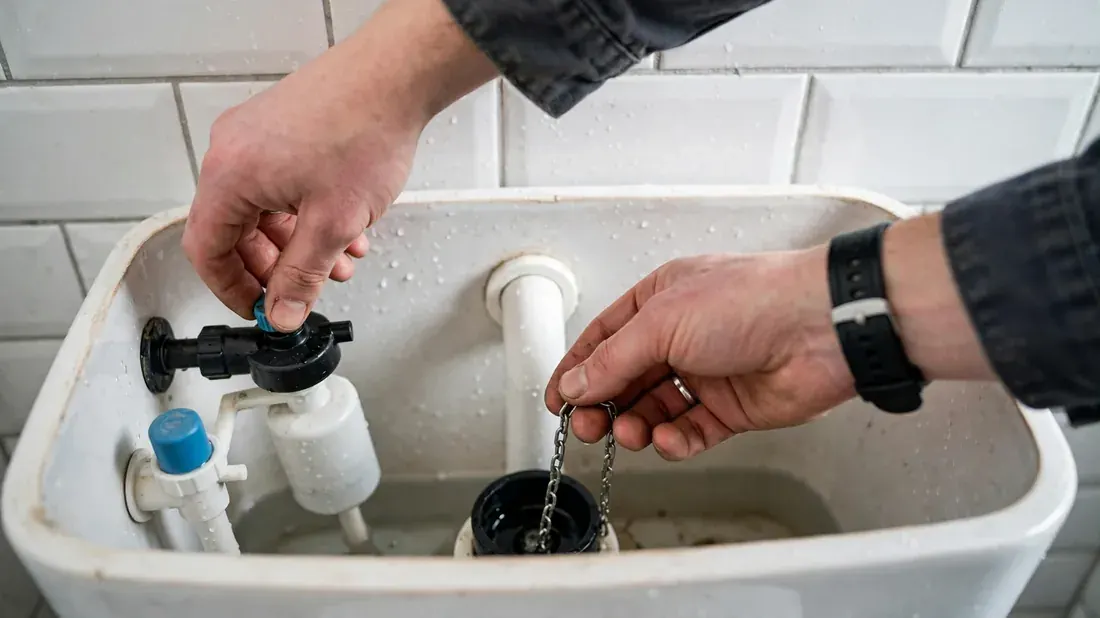
Flappers, fill valves, flush mechanisms and the wax seal at the base — the full short list of ways a toilet wastes water or betrays a floor.
Cartridges and mixing valves replaced so temperature holds steady, plus diverters that send water where the handle says it went.
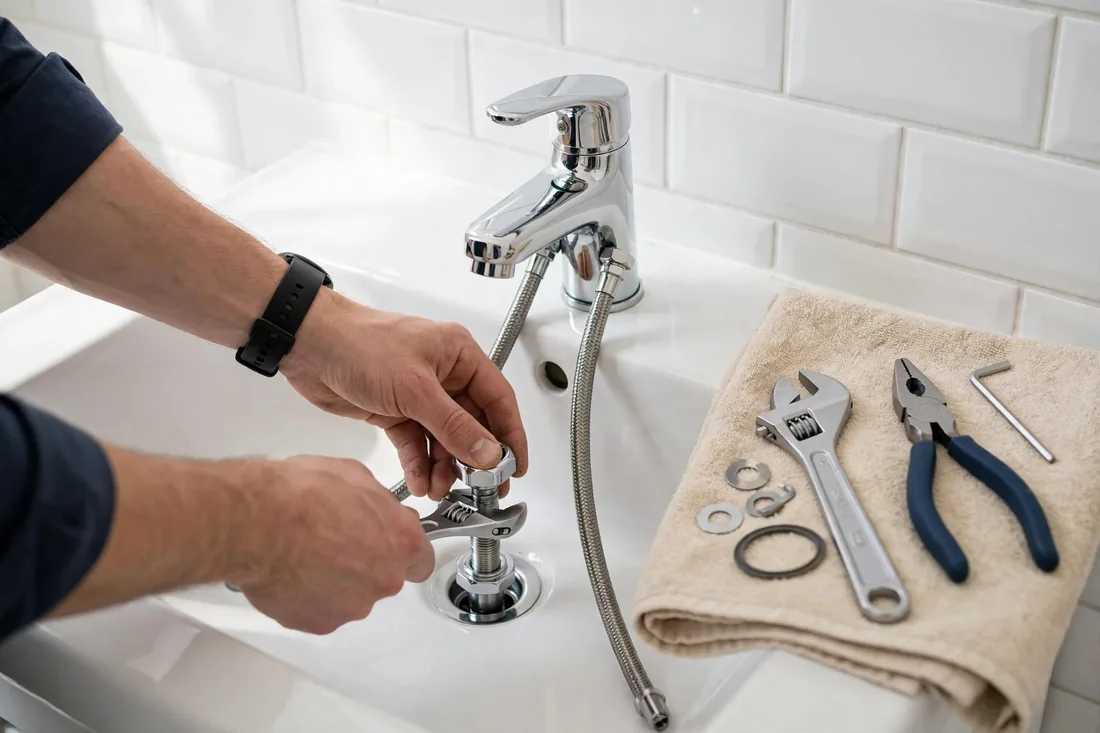
Drips diagnosed to their cartridge or seat, faucets fitted and sealed, supply lines renewed where age has made them suspect.
Sink and tub drains cleared, traps replaced, and use-only leaks hunted by controlled testing — run the fixture, watch the joint.
Which bathroom, which fixture, what it does wrong and since when. Bathroom calls sort quickly when the description is exact — that is the intake call's whole art.
A local plumber takes the bathroom as scoped — one fixture or the room — with the parts the description points to already on the truck.
Faults are proven first — the tank test, the dye test, the run-and-watch — and the repair is proven the same way before it is called done.
Every joint run and checked under real use, and any fault found beyond the scope named plainly, with its own scoped options.
Food dye in a toilet tank tells the truth about a flapper in twenty minutes; a meter watch tells it about the whole room. Simple tests, definite answers.
The specialized small tools that remove worn valve cartridges without damaging the valve body they live in — the difference between a part swap and a valve replacement.
Hand and small cable machines sized for tub and sink lines — clearing the branch without pretending it is the main line.
A floor or wall that looks dry can read wet. The meter checks what eyes cannot, around toilet bases and below tub drains especially.
A tank refilling every twenty minutes all night, a water meter that agreed something was wrong.
A flapper and fill valve replaced, the dye test clean, and a house quiet at 3 a.m. for the first time in months.
A kitchen ceiling staining after every bath, blamed on everything except the obvious.
Controlled testing found the tub drain joint opening under load — resealed, run full, and dry through a week of baths.
A shower swinging from cold to scalding whenever a tap opened elsewhere in the house.
The worn mixing cartridge replaced and balanced — a shower that holds its temperature like it means it.
The situations this service exists for — described the way homeowners describe them on the call.
The quietest water waste in the house, and one of the largest. Tank parts are small; the water they lose is not.
Tub and shower drain joints that open under weight and water — invisible to any test except running the fixture and watching.
Cartridges are wear parts with a service life. When drips and temperature swings begin, replacement restores the fixture instead of tolerating it.
Water is leaking from the tank into the bowl — almost always past a worn flapper — and the fill valve tops the tank up when the level drops. It is a small part wasting a large amount of water, and the dye test proves it in minutes.
Either condensation, supply line weeping, or the wax seal at the base failing. The last one matters most: it lets flush water into the floor structure. A rocking toilet makes seal failure more likely — it should be checked, not caulked over.
Yes, and it is a corridor classic: the joint seals at rest and opens when the tub is full and occupied. The ceiling below stains after baths, not after rain — that timing is the clue, and controlled testing confirms it.
If the valve body is sound, a cartridge restores it fully and is the sensible spend. If the body itself is corroded or the finish failed, replacement earns its keep. The plumber's job is to show you which one you own before you decide.
Burst pipes, sewage backing up, water where it should not be — the call to make when the problem cannot wait for tomorrow.
Slow sinks, tubs that drain at a crawl, drains that gurgle — clearing matched to the line, not just the fixture.
No hot water, water that fades fast, rumbling tanks and pilot problems — diagnosed by test, not by guessing parts.
Replacing a failed tank or sizing a new one — matched on capacity, fuel and the house it serves, set and verified in place.
Root-filled laterals, cracked clay pipe, sagging lines — camera-located, honestly scoped, and repaired at the defect.
Meters that move with everything off, stains that grow, bills that make no sense — leaks located by instrument, then opened once.
Rusty water, weak pressure, one leak after another — when the supply system itself is the problem, replacing it is the repair.
Sink drains clogged with the years, disposals that hum and quit, dishwasher connections and under-sink leaks — the kitchen's working plumbing.
Pumps that die silently and are discovered by the flood — replacement, new installation, check valves and backup systems.
The underground line from the street to the house — leaking joints, corroded runs, low pressure with a creeping meter.
One intake takes the job's description once and matches it with an independent local plumber who serves your city.
📞 Call NowMon–Fri 7 AM–10 PM · Sat 8 AM–10 PM · Sun 7 AM–9 PM ET
One way in while this area's local intake number is being connected: the contact route on this page. Describe the problem, and the matching starts. That is the whole system — by design.
Start here — one intake for all 16 cities, via the contact page while the local number is being connected.
✉For non-urgent questions about the service.
Mon–Fri 7 AM–10 PM · Sat 8 AM–10 PM · Sun 7 AM–9 PM
Describe the problem once — where it is, what it is doing, when it started — and the intake matches you with an independent local plumber who serves your city.
📞 Call Now or write to us rankandrent2+plumbing-new-jersey@gmail.com