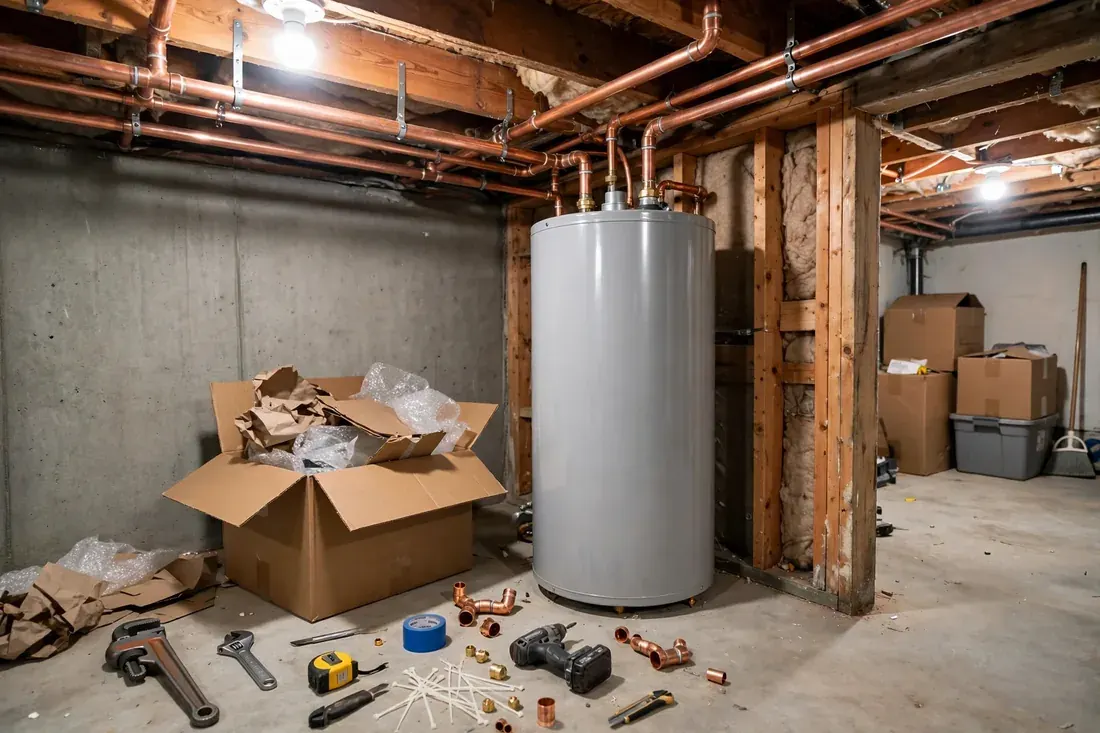
A water heater replacement is usually decided in a hurry — the old tank fails, and the house needs hot water back. The hurry is exactly why the sizing conversation matters: the replacement that goes in will serve the house for a decade, and the time to match it to the household is before it is plumbed in, not after the first cold shower.

Tank sizing turns on a simple question: how much hot water does the house draw in its busiest hour? A couple in a condo and a family of five with a soaking tub live in different worlds, and both are ill-served by guessing. Too small and the heater loses every morning; too large and it heats water nobody uses, wearing itself out keeping it warm.
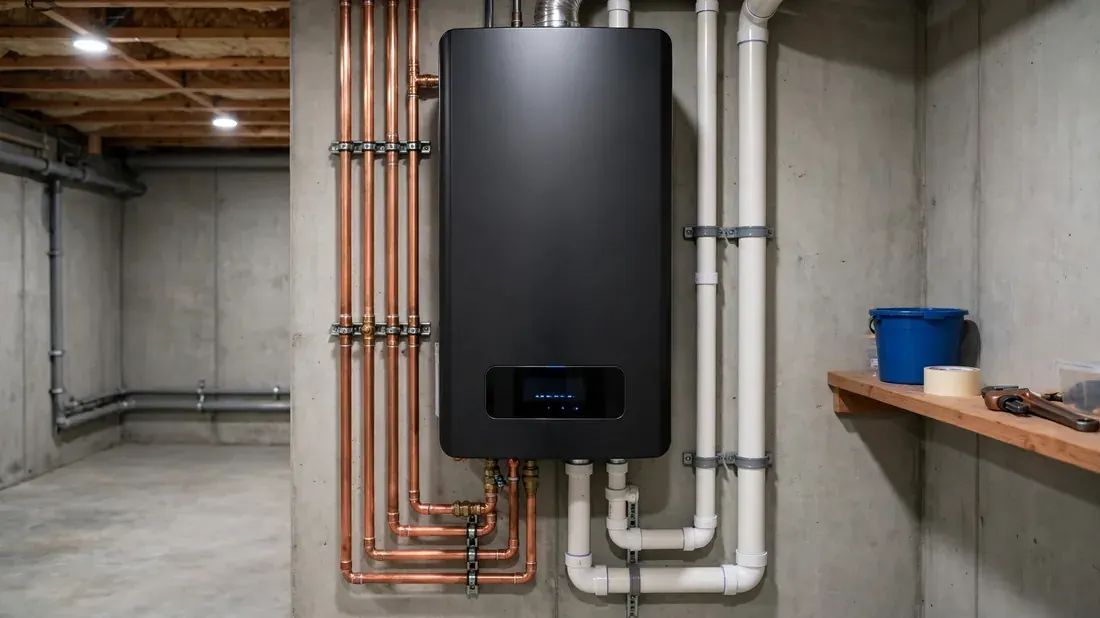
The second choice is fuel and form. Most corridor homes run gas or electric tanks; tankless units heat on demand and suit some houses beautifully — steady, moderate draws and tight spaces — while high simultaneous demand can outrun them without careful sizing. The honest installer asks about the house first and recommends second, in that order.
Installation covers removing the failed unit, setting the replacement, connecting water, fuel and venting to code, and verifying operation at the taps before the job is called done. In New Jersey, water heater work is permit work in most municipalities — the installer handles the installation to the standard the inspection expects, and the permit process for your town is part of the scope conversation on the call.
What installation is not: a same-size swap assumed without questions. If the old heater was wrong for the house — in capacity, in fuel, in venting — replacing like with like repeats the mistake for another decade. The scope conversation exists to catch that, and it asks nothing but a few honest answers.
People, bathrooms, tubs and laundry habits translated into a capacity that fits — for tank and tankless options alike.
The failed heater drained, disconnected and taken out as part of the job, not left as your problem in the basement corner.
Water, fuel, venting and the relief valve set to current standard — including the expansion and pan details older installs often lack.
Hot water proven at the fixtures, the thermostat set sensibly, and the new unit's details — age label, shut-offs — walked through with you before leaving.
On the intake call: the old heater's size and fuel if known, the household it serves, and whether it failed or is being retired on purpose.
A local plumber who installs heaters takes the job; the scope — unit, connections, permit steps for your town — is confirmed with you before work begins.
Drain, disconnect, remove; set, connect, fill and fire — in that order, with the water off for the shortest honest window.
Hot water at the taps, settings explained, and the new tank's label photographed or noted for your records — the next decade starts documented.
First-hour demand worked out from fixtures and people — arithmetic, not habit, decides the gallon size or the tankless unit's flow capacity.
Exhaust paths checked for the new unit's requirements; a tankless or high-efficiency swap can change what the vent must be.
The small hardware that decides whether connections corrode early — dissimilar metals separated, thermal expansion given somewhere to go.
Especially above finished space: the pan and alarm that turn a future failure from a ceiling replacement into a notification.
A twelve-year-old heater weeping from its base, a house of five, and a work week starting in the morning.
The replacement sized a step up for the household that actually lives there, set the same visit, and hot water back before the day was out.
A condo owner on their second heater in six years, each a same-size swap that never kept up with two bathrooms.
The sizing done by demand this time — and the morning shower problem retired with the old unit.
A homeowner replacing a working but ancient heater before it could choose its own timing.
A scheduled install with the permit steps handled in order — and no emergency anywhere in the story.
The situations this service exists for — described the way homeowners describe them on the call.
A tank leaking from its body has one honest fix. Replacement done promptly is what keeps a failure from becoming water damage.
When the house has outgrown the heater, no repair restores capacity that was never there. Correct sizing ends the morning negotiations.
An aging heater that faults every season is spending its replacement in installments. The verdict conversation compares the two honestly.
By its busiest hour: how many showers, baths, laundry and dishwashing overlap on your fullest morning. That demand, not the old tank's label, should size the new one — the installer works it out with you on the scope call.
Sometimes. Tankless suits steady demand and tight space, and its sizing is about flow at peak moments, not gallons stored. A household that runs two showers and laundry at once needs that peak honestly calculated before anyone promises it will keep up.
In most New Jersey municipalities, yes — water heater replacement is permit work, and the installation should be done to the standard inspection expects. Your installer confirms the steps for your town as part of the scope.
If it is well past its expected life and sits above finished space, planning the replacement beats the emergency version of the same job in every way — timing, choice and calm. It is one of the few plumbing decisions you get to make on your own schedule.
Burst pipes, sewage backing up, water where it should not be — the call to make when the problem cannot wait for tomorrow.
Slow sinks, tubs that drain at a crawl, drains that gurgle — clearing matched to the line, not just the fixture.
No hot water, water that fades fast, rumbling tanks and pilot problems — diagnosed by test, not by guessing parts.
Root-filled laterals, cracked clay pipe, sagging lines — camera-located, honestly scoped, and repaired at the defect.
Meters that move with everything off, stains that grow, bills that make no sense — leaks located by instrument, then opened once.
Rusty water, weak pressure, one leak after another — when the supply system itself is the problem, replacing it is the repair.
Running toilets, leaking tubs, tired faucets and drains that sulk — the wettest room in the house, serviced fixture by fixture.
Sink drains clogged with the years, disposals that hum and quit, dishwasher connections and under-sink leaks — the kitchen's working plumbing.
Pumps that die silently and are discovered by the flood — replacement, new installation, check valves and backup systems.
The underground line from the street to the house — leaking joints, corroded runs, low pressure with a creeping meter.
One intake takes the job's description once and matches it with an independent local plumber who serves your city.
📞 Call NowMon–Fri 7 AM–10 PM · Sat 8 AM–10 PM · Sun 7 AM–9 PM ET
One way in while this area's local intake number is being connected: the contact route on this page. Describe the problem, and the matching starts. That is the whole system — by design.
Start here — one intake for all 16 cities, via the contact page while the local number is being connected.
✉For non-urgent questions about the service.
Mon–Fri 7 AM–10 PM · Sat 8 AM–10 PM · Sun 7 AM–9 PM
Describe the problem once — where it is, what it is doing, when it started — and the intake matches you with an independent local plumber who serves your city.
📞 Call Now or write to us rankandrent2+plumbing-new-jersey@gmail.com