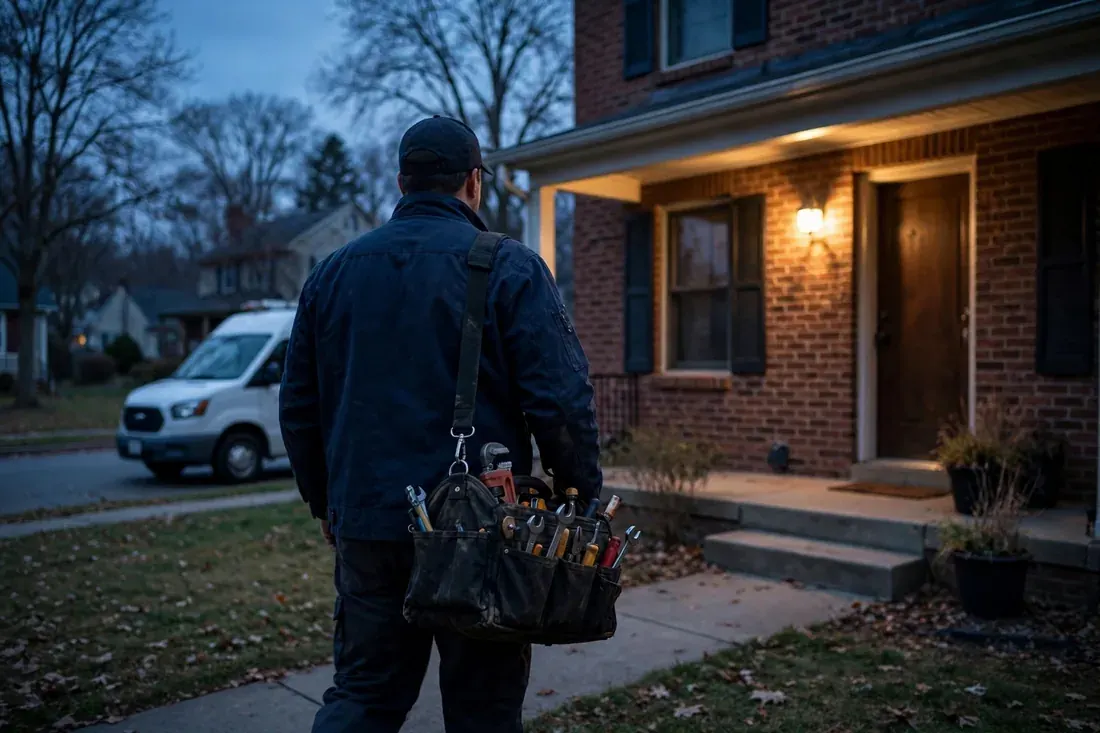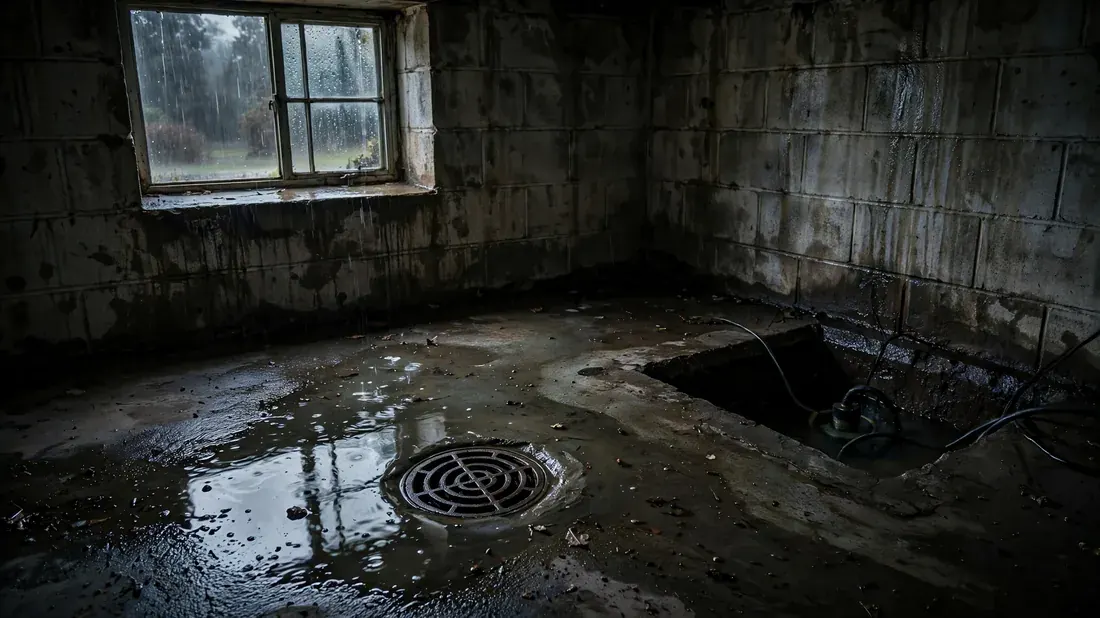
Some plumbing problems keep office hours. The ones on this page do not. A burst pipe, a sewer line sending water back into the house, a water heater letting go at midnight — these are the calls where the first hour decides how much damage the house takes. Describe it once, say clearly that it is active, and the intake treats it accordingly.

An emergency in plumbing has a simple definition: water is moving where it should not be, or sewage is involved, or the house has lost its only working toilet or its water entirely. Everything else can be scheduled; these cannot, because the damage compounds by the hour — flooring, drywall and framing all drink water they were never meant to meet.
The corridor's housing sets the local pattern. Older Elizabeth and Newark buildings carry aging cast iron and galvanized lines that let go in freeze-thaw swings; basements across Union County sit close to a high water table, so a failed sump or a backed-up lateral becomes a flood quickly. The emergency is rarely exotic — it is ordinary pipe meeting an extraordinary hour.
This service matches true plumbing emergencies: burst and leaking lines, sewer backups, failed water heaters, overflowing fixtures and sump failures, across all 16 cities the site covers. The intake sorts by what is happening now — active water and sewage first — and matches the job with an independent local plumber who handles emergency work.
It does not cover gas emergencies beyond the plumbing side: if you smell gas, the safe move is to leave the building and call the utility or 911 from outside before any plumber. It also is not the route for planned work — repiping, remodels and upgrades belong on their own service pages, where they get a proper scope instead of an urgent one.
While the match is being made, the intake talks you to the right shut-off — the fixture valve, the house main, or the water heater's supply — because stopping the water is the first repair.
Backups get sorted as the health hazard they are: what is coming up, where, and whether the cause sits in the house line or beyond it.
Split lines and failed fittings matched fast, with the description that lets the plumber arrive ready — pipe material, location, and whether the water is off.
A tank leaking from its body is a replace-it situation; the intake sorts it that way from the first description instead of sending a repair that cannot hold.
Lead with what is happening: "water is coming through the kitchen ceiling." Active water changes the sorting of the call from the first sentence.
With guidance from the intake, close the nearest shut-off or the house main. Every minute of flow stopped is damage that never happens.
The job goes to an independent plumber serving your city who takes emergency work — local, because minutes and street knowledge both matter.
The matched plumber confirms the scope of work with you before anything begins, even in an emergency. Urgency is not a blank page.
The fastest tool in an emergency is often the house's own valve — or the curb stop when the house valve has failed. Knowing both locations is part of the trade.
Removing standing water quickly limits how far it spreads into flooring and wall bases while the repair is being made.
Temporary control of a split line — clamping or capping a break so the house can have partial water back while the permanent repair is scoped.
For backups, a machine clears and a camera explains — so the emergency fix and the lasting fix are decided on evidence, not hope.
Water pouring through a ceiling, the house main unknown, furniture drinking water by the minute.
The main closed within the call, the split section isolated and repaired, and the homeowner knowing exactly where their shut-off lives for next time.
Sewage rising in the floor drain with every flush upstairs, the lowest bathroom unusable.
The line cleared and camera-checked, the cause named — roots, a belly, a break — and a real plan instead of a hope that it holds.
A tank weeping from its base into a growing puddle, hot water gone with it.
The old tank drained and replaced, the new one set and heating — and the puddle a story instead of a floor replacement.
The situations this service exists for — described the way homeowners describe them on the call.
Freeze-thaw winters and aging galvanized lines make this the corridor's signature emergency — water under pressure, inside a wall, on a clock.
When the main line blocks, the house's lowest openings become the exit. The response sorts health and cause together.
A tank that leaks from its body cannot be patched. The emergency is water and time, and the fix is a replacement done right.
Active water where it should not be, any sewage backup, a burst pipe, losing your only toilet, or losing water entirely. If water is moving and damaging the house, it qualifies — describe it that way on the call.
Stop the water at the nearest shut-off or the house main, move belongings out of the wet area, and keep clear of electrical outlets and appliances standing in water. The intake will talk you through the shut-off on the call.
Leave the building first and call the utility or 911 from outside. Gas safety comes before plumbing. Once the utility clears the scene, the plumbing side can be matched normally.
Often, yes — the emergency gets controlled, and the underlying cause (an aging line, a root-filled lateral) becomes a scoped job afterward. The matched plumber confirms that scope with you separately before it begins.
Slow sinks, tubs that drain at a crawl, drains that gurgle — clearing matched to the line, not just the fixture.
No hot water, water that fades fast, rumbling tanks and pilot problems — diagnosed by test, not by guessing parts.
Replacing a failed tank or sizing a new one — matched on capacity, fuel and the house it serves, set and verified in place.
Root-filled laterals, cracked clay pipe, sagging lines — camera-located, honestly scoped, and repaired at the defect.
Meters that move with everything off, stains that grow, bills that make no sense — leaks located by instrument, then opened once.
Rusty water, weak pressure, one leak after another — when the supply system itself is the problem, replacing it is the repair.
Running toilets, leaking tubs, tired faucets and drains that sulk — the wettest room in the house, serviced fixture by fixture.
Sink drains clogged with the years, disposals that hum and quit, dishwasher connections and under-sink leaks — the kitchen's working plumbing.
Pumps that die silently and are discovered by the flood — replacement, new installation, check valves and backup systems.
The underground line from the street to the house — leaking joints, corroded runs, low pressure with a creeping meter.
One intake takes the job's description once and matches it with an independent local plumber who serves your city.
📞 Call NowMon–Fri 7 AM–10 PM · Sat 8 AM–10 PM · Sun 7 AM–9 PM ET
One way in while this area's local intake number is being connected: the contact route on this page. Describe the problem, and the matching starts. That is the whole system — by design.
Start here — one intake for all 16 cities, via the contact page while the local number is being connected.
✉For non-urgent questions about the service.
Mon–Fri 7 AM–10 PM · Sat 8 AM–10 PM · Sun 7 AM–9 PM
Describe the problem once — where it is, what it is doing, when it started — and the intake matches you with an independent local plumber who serves your city.
📞 Call Now or write to us rankandrent2+plumbing-new-jersey@gmail.com