✉ rankandrent2+plumbing-new-jersey@gmail.com Mon–Fri: 7 AM–10 PM · Sat: 8 AM–10 PM · Sun: 7 AM–9 PM
Plumbing services

Sewer Line Repair in Elizabeth & the Corridor

The sewer lateral is the hardest-working pipe a homeowner owns and the one they think about least — until it backs up. In this corridor, most laterals are clay tile laid generations ago, and they fail in three familiar ways: roots at the joints, cracks from age and ground movement, and bellies where the line has settled. This service starts where every honest sewer job starts: with a camera.

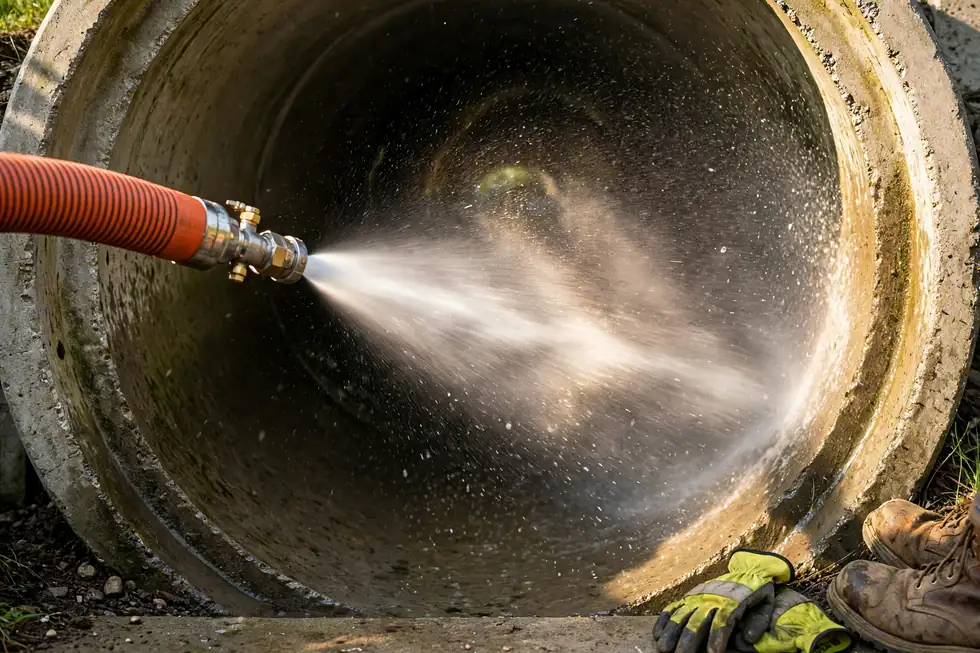
Hydro jetting equipment used to clear a sewer line
Understanding

Understanding the Corridor's Sewer Laterals

A lateral runs from the house to the city main, usually under the front yard, and in Elizabeth, Newark and the older Union County towns it is very often vitrified clay — durable pipe, but laid in short sections with a joint every few feet. Each joint is a door. Tree roots need only a hair of moisture escaping to find it, and once inside, they grow into the flow path and catch everything the house sends down.

The other failures are mechanical. Ground settles and a section sags into a belly that holds water and solids. Age and shifting soil crack a section or offset a joint. A camera run sees all of it — the defect, its distance from the cleanout, and its depth — and that picture is what separates a scoped repair from a yard dug on a hunch.

  • Backups that return weeks after a clearing
  • Sewage odors in the yard or the basement
  • A patch of lawn that is greener or softer than the rest
  • Gurgling through the house when the washer drains
  • A camera finding roots, cracks, an offset or a belly
  • Slow drains everywhere that no clearing has cured for long
The honest scope

What Sewer Repair Covers — and the Property-Line Rule

Repair covers the homeowner's lateral: spot repairs at a located defect, section replacements, and full lateral replacement where the camera shows a pipe beyond saving. The method — open trench at the defect, or a trenchless approach where conditions suit — follows the evidence: depth, soil, what sits above the line, and how much of the pipe is sound.

One boundary matters and the plumber will state it plainly: the lateral is the homeowner's responsibility up to the city main in most of these municipalities, while the main itself is the city's. A camera inspection establishes which side of that line a problem sits on — so nobody pays to repair the city's pipe, and nobody waits on the city to fix theirs.

What's included

What a Sewer Repair Includes

Camera location first

The defect found, filmed and measured before any digging — distance from the cleanout and depth below grade, in the scope you approve.

Spot repair at the defect

Where the rest of the line is sound, the repair digs at the bad section only — the smallest honest hole in the yard.

Section or full replacement

Where the camera shows systemic failure, the scope says so and lays out the conversation in sections you can see on the recording.

Flow verified before backfill

The repaired line run and watched — water moving through the fix — before the trench closes. Nobody buries an unproven repair.

The process

Our Sewer Line Repair Process

Backups, clearings, what the last plumber said. A lateral's history is half its diagnosis — give it fully on the intake call.

The inspection that decides everything: defect, distance, depth, and the condition of the rest of the pipe, all on screen.

Spot repair or replacement, trench or trenchless — proposed from evidence and confirmed with you before a shovel moves.

The work done, the line run and camera-checked again, and the yard left with the repair documented for your records.

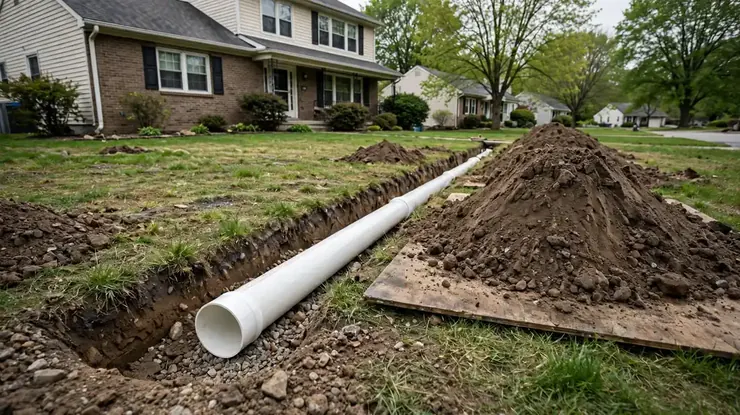
A sewer lateral exposed for repair in a front yard

Confirmed before work begins

Each step is talked through on the call and confirmed on site by the matched plumber.

Tools & methods

Tools and Methods for Sewer Repair

Sewer cameras and locators

The camera finds the defect; a locator above ground marks its exact spot and depth — the pair that keeps the digging to one honest hole.

Root cutting and jetting

Clearing that prepares a line for inspection or buys time ahead of a repair — cutting roots out so the camera can see what they were hiding.

Excavation at the defect

Traditional digging, shored and careful, aimed at the located section — still the standard for collapsed or offset pipe.

Trenchless methods where they suit

Lining and bursting approaches that renew a lateral with minimal digging — offered when the pipe's condition and layout genuinely suit them, not as a default.

Before and after

Before and After — What Changes

Before

The quarterly backup

A house that backed up every few months, each clearing a little less effective than the last.

After

The camera found roots massed at two joints; the section was replaced, and the backup calendar ended.

Before

The green stripe in the yard

A lawn stripe that stayed lush in a dry summer, with a faint odor on still days.

After

A cracked section located by camera, dug at the mark, and replaced — the stripe faded with the next dry spell.

Before

The belly nobody could clear

A line that drained slowly no matter how it was cleaned, solids settling where water stood.

After

The sagged section re-laid at grade, the line running clean and staying that way.

Problems we solve

Problems Solved by Sewer Line Repair

The situations this service exists for — described the way homeowners describe them on the call.

01

Root intrusion

Roots enter at joints and rebuild after every cutting. Repairing the joint they use — or replacing the section — is the ending of that story.

02

Cracked and offset pipe

Age and ground movement open clay laterals. A located crack gets a located repair, not a yard of guesswork.

03

Bellies and sags

A settled section holds water forever and clogs by design. Re-laying the section at grade is the only fix that lasts.

Good questions

Sewer Line Repair — Frequently Asked Questions

A camera inspection answers it: the defect's location relative to the property line and the main decides whose pipe it is. If the whole street shares the symptom, that points to the main; one house alone points to its lateral.

Cutting clears them; it does not seal the door they entered. Where roots return on a cycle, repairing or replacing that jointed section is the lasting fix, and the camera record shows exactly which sections earn it.

Not always. It suits a line that is continuous and correctly graded with defects in the pipe wall. A collapsed, offset or bellied line usually needs excavation at the defect. The camera evidence, not the brochure, should make that call.

A located spot repair is often a single day of work once the scope is set: dig, repair, verify flow, backfill. Full replacements and permit-dependent situations take longer — the scope you approve will carry the honest timeline for your yard.

Keep exploring

Related Services

One call starts it

Need Sewer Line Repair in Northern New Jersey?

One intake takes the job's description once and matches it with an independent local plumber who serves your city.

📞 Call Now

Mon–Fri 7 AM–10 PM · Sat 8 AM–10 PM · Sun 7 AM–9 PM ET

Get in touch

Call Before the Problem Gets Worse

One way in while this area's local intake number is being connected: the contact route on this page. Describe the problem, and the matching starts. That is the whole system — by design.

One Call Starts It

Describe the problem once — where it is, what it is doing, when it started — and the intake matches you with an independent local plumber who serves your city.

📞 Call Now or write to us rankandrent2+plumbing-new-jersey@gmail.com
📞Call nowCall Now