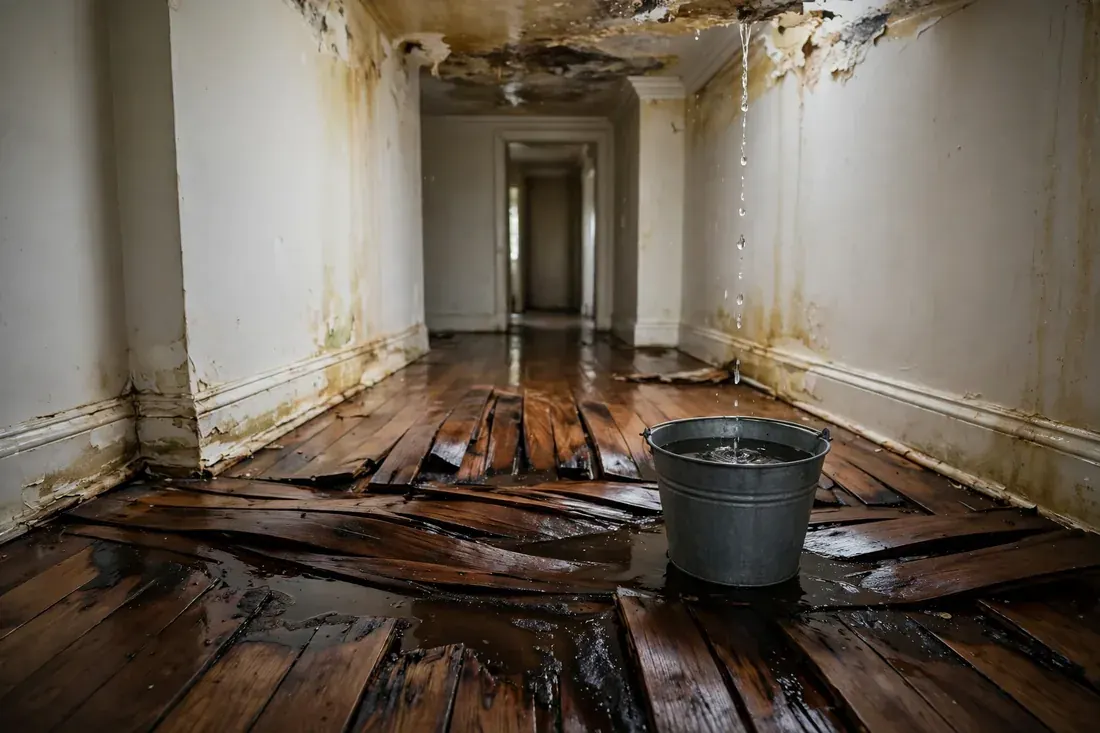
The leaks that do the real damage are rarely the dramatic ones. A burst pipe announces itself. A hidden leak — a pinhole in a supply line inside a wall, a joint weeping under a floor — can run for months, quietly feeding mold, rot and a water bill that makes no sense.
The good news: a hidden leak leaves evidence, and most of the detective work needs nothing more than your water meter and your own eyes. Here is the order an experienced plumber would tell you to work in.
The Meter Test: Proving a Leak Exists
Start by proving there is a leak at all. Turn off every water-using fixture and appliance — no taps, no laundry, no ice maker — then find your water meter and look at its flow indicator. On most meters a small dial or triangle spins when water moves. If it moves while nothing in the house is running, water is going somewhere it should not.
For a slower leak, note the meter reading, avoid using water for two hours (overnight works well), and read it again. Any change with zero use confirms the leak is real and gives you a rough sense of its size. That single fact transforms the search: you are no longer wondering, you are locating.
Isolating the Zone
Next, split the house in two. If you have a shut-off for the hot water side or for individual floors, close one zone at a time and repeat the meter watch. A leak that stops when a zone closes lives in that zone. Toilets deserve their own check — a silently running toilet is the single most common hidden water loss in a home, and it needs no wall opened to find: listen for it, and watch whether the tank refills when nobody has flushed.
Outside counts too. In this corridor, garden hose bibs and the underground service line between the street and the house are frequent quiet leakers, especially after freeze-thaw winters. A patch of lawn that stays green and soft while the rest dries is a classic tell.
Reading the Building's Clues
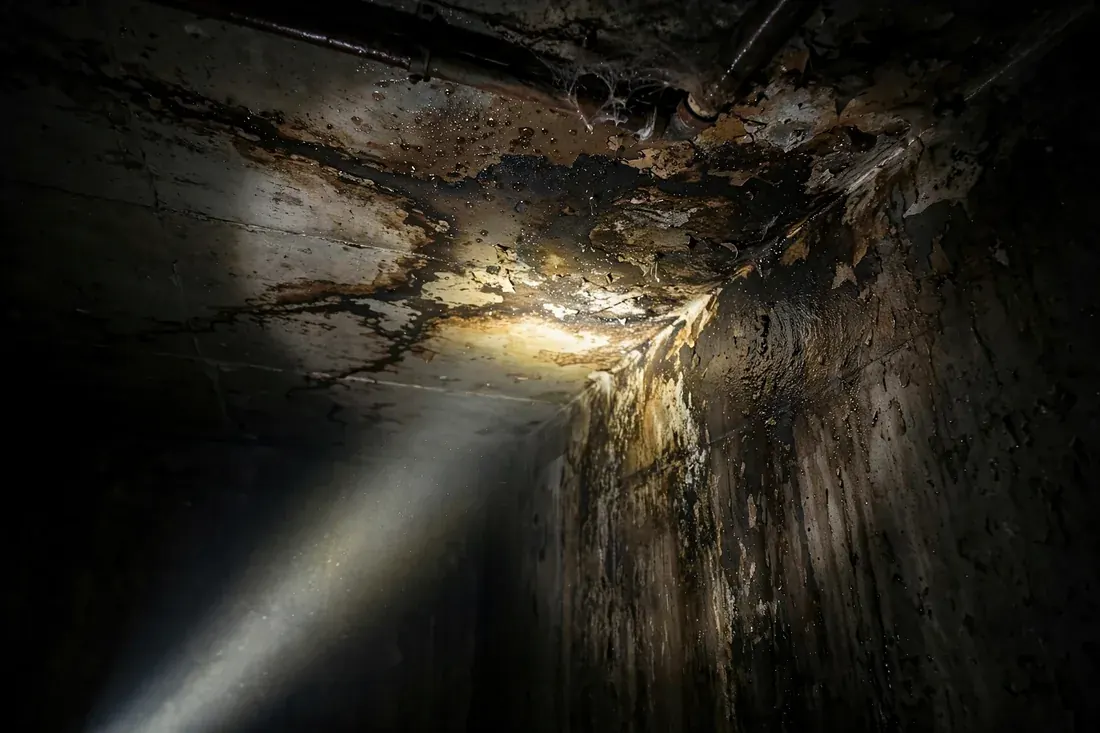
Water travels along framing and pipes before it shows itself, so the visible clue is often a room away from the source — but it is never random. A ceiling stain maps to the wet room or line above it. Buckled flooring, bubbling paint at a baseboard, a musty smell localized to one wall: each one is the building telling you where the moisture concentrates.
Warm spots on a floor can point to a hot-water line leaking beneath it. A cabinet floor under a sink that stays damp, softened particleboard, or corrosion blooms on supply fittings are all small leaks that have simply not been caught yet. Photograph what you find with dates — the growth of a stain over a week is diagnostic information.
The Common Hiding Places in Corridor Housing
In the older housing stock around Elizabeth and Union County, the repeat offenders are consistent: galvanized supply lines pinholing near threaded joints, copper lines worn where they pass through framing, water heater fittings weeping at the tank, and washing-machine hoses aging behind the machine where nobody looks.
Basements hide leaks in plain sight — a slow drip at a meter union or a pressure valve can run down a wall and into a floor drain for months, invisible precisely because the drain disposes of the evidence. Walk the basement with a flashlight and look for mineral trails: white or green crust on a pipe is dried evidence of water that was there.
Finding It Without Opening Every Wall
When the clues narrow the zone but not the spot, modern leak detection earns its keep. Acoustic equipment listens for the sound pressurized water makes escaping a pipe — a noise too quiet for the ear alone. Thermal imaging shows the cool signature of moisture inside a wall. Pressure testing isolates a line and proves whether it holds.
The point of all three is the same: locate first, open once. A plumber who wants to start by cutting exploratory holes in several walls is working in the wrong order — the tools exist so the opening happens where the leak actually is.
What to Do the Moment You Confirm It
If the leak is active and you know the main shut-off, closing it protects the house while you arrange the repair — note that this also stops water to everything, so fill a few containers first. Move anything water-sensitive away from the area, and if a ceiling below is bulging with water weight, treat it as urgent: that is stored water looking for a way down.
Then call. On the intake call, report the meter test result and where the clues point — "meter moves with everything off, stain growing under the upstairs bath" is a description that gets the right equipment into the right truck. For the 16 cities covered here, that call is the intake line on this page.
Get Help With Plumbing in Northern New Jersey
Guides explain the system; they do not turn a wrench. If this one ends at "this needs a plumber", call the intake line, describe what you found, and get matched with an independent local plumber who serves your city.
📞 Call Now