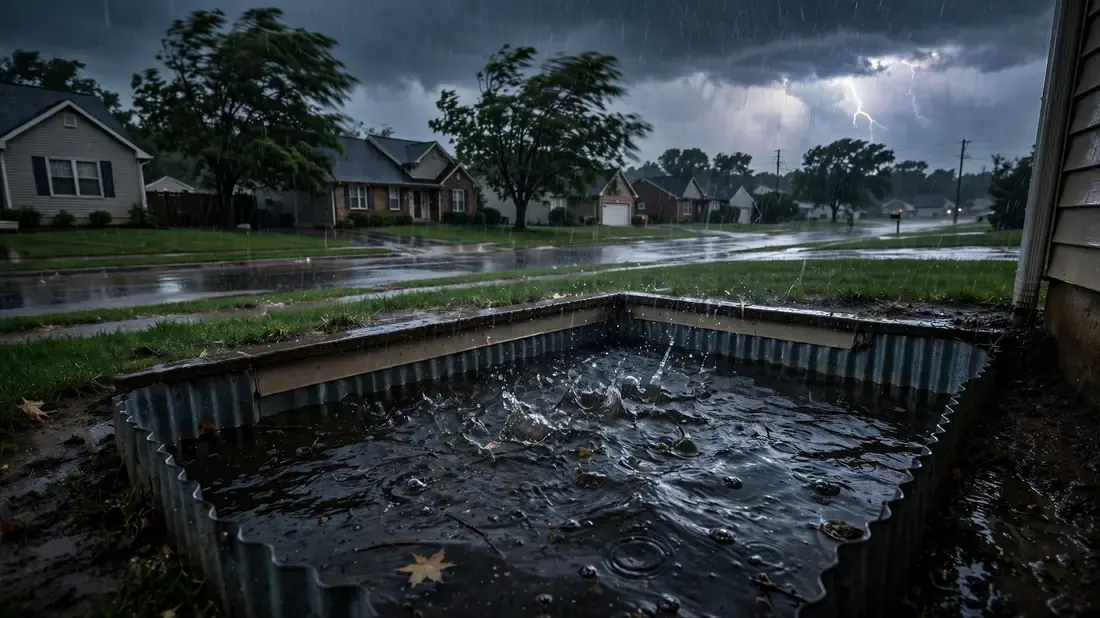
Sump pumps fail at the worst possible moment by design: the storm that knocks out power or overwhelms the pit is the same storm that fills it. Anyone who lived through the flooding that hit Elizabeth and the corridor during Ida in 2021 knows how fast a basement can go from dry to wading depth.
This guide is about the first hour — the checks and moves that limit damage while the rain is still falling — and the honest conversation to have afterward about backup systems.
First: Safety Before Salvage
Water and electricity share a basement badly. If water is anywhere near outlets, the panel, or appliances, do not wade in to reach the pump — a tripped breaker or a call to the utility comes first. If the basement holds a gas appliance standing in water, leave it alone and treat that as its own problem.
With power safely on and water shallow, work in rubber boots, keep cords out of the water, and remember that storm water in a basement is not clean water. Gloves now, thorough cleaning later.
The Four Fast Checks
Most storm failures are one of four things, and three of them you can find in minutes. One: power — check the outlet and the breaker; pumps often share a circuit that trips under storm load, and a GFCI outlet that has tripped leaves the pump silent in a filling pit. Two: the float — the switch that tells the pump to run can jam against the pit wall or hang up on debris; lift it by hand and listen.
Three: the discharge — follow the line out and confirm water can actually leave; a frozen, crushed or blocked discharge line makes a healthy pump useless. Four: the intake screen at the pump's base can blind over with sediment and grit, starving a pump that still hums.
Buying Time While the Pit Rises
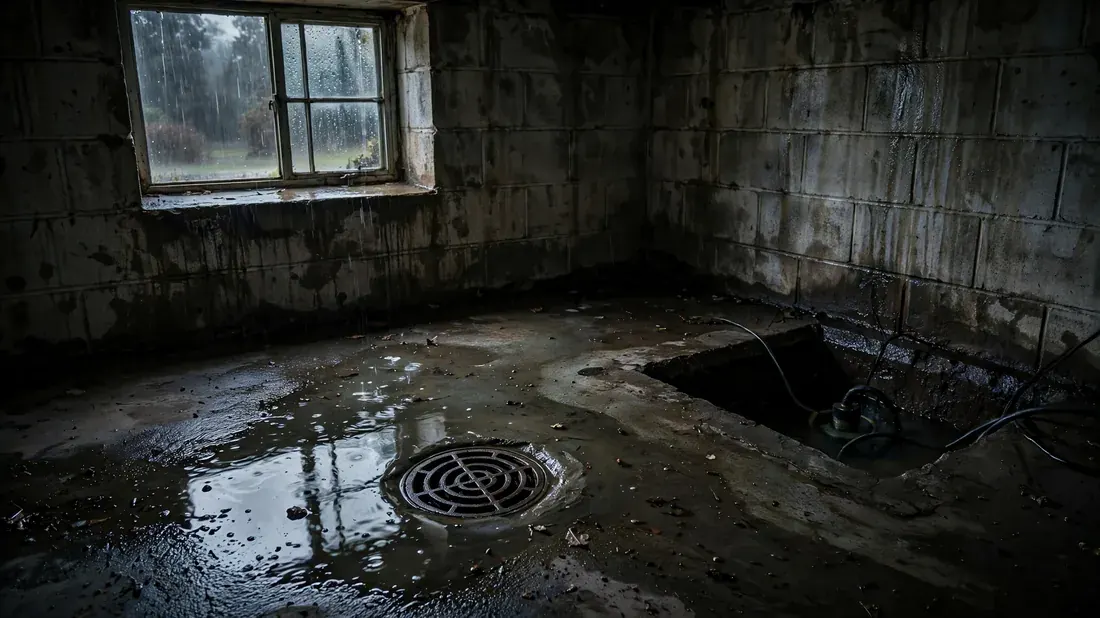
If the pump will not run, you are bailing against the storm's clock. A wet vacuum, buckets and any portable utility pump you own all move water; even slow removal protects the things that matter if you triage: raise electronics, documents, photographs and anything upholstered off the floor first, in that order.
Protect the furnace and water heater if you can do it safely — a few inches spared there is the difference between a wet basement and a house without heat or hot water afterward. Move what is on the floor near walls toward the center only if the center is drier; otherwise get it up, not across.
What Not to Do
Do not run a generator indoors or in a garage with the door down, ever — carbon monoxide is the storm risk that does not announce itself. Do not plug the pump into a long lightweight extension cord snaking through water; if a cord is unavoidable it should be a heavy-duty one, routed dry, as a bridge to a working outlet.
And do not assume a pump that restarts has healed. A float that stuck once will stick again, and a pump that tripped its circuit under load has told you something about its age or the circuit. The storm ending is the start of the repair conversation, not the end of the problem.
Why Pumps Fail in Corridor Basements
The pattern here is consistent: pumps installed when a house was built or last renovated, running a decade past their prime, in pits that collect the iron-rich sediment this region's groundwater carries. Add the corridor's high water table near the Rahway and Elizabeth rivers and the intense rain events the area now sees regularly, and the margin disappears.
Age plus load is the formula. A pump does not have to be broken to fail — it only has to be slower than the water arriving, which is why an honest assessment after a storm includes the question of capacity, not just repair.
The Backup Conversation
After any failure, the follow-up that matters is a backup system, because the next storm will also threaten the power. The two proven options are a battery-backup pump that runs when the main pump cannot, and a water-powered backup that uses city water pressure to move pit water with no electricity at all. Each suits different houses; the choice turns on your water pressure, your pit, and how the first failure happened.
If your basement took water in one of the 16 cities this site covers, call the intake line once the storm passes and describe what the pump did — silent, humming, or running but losing. That detail is exactly what sorts a switch replacement from a system redesign.
Get Help With Plumbing in Northern New Jersey
Guides explain the system; they do not turn a wrench. If this one ends at "this needs a plumber", call the intake line, describe what you found, and get matched with an independent local plumber who serves your city.
📞 Call Now