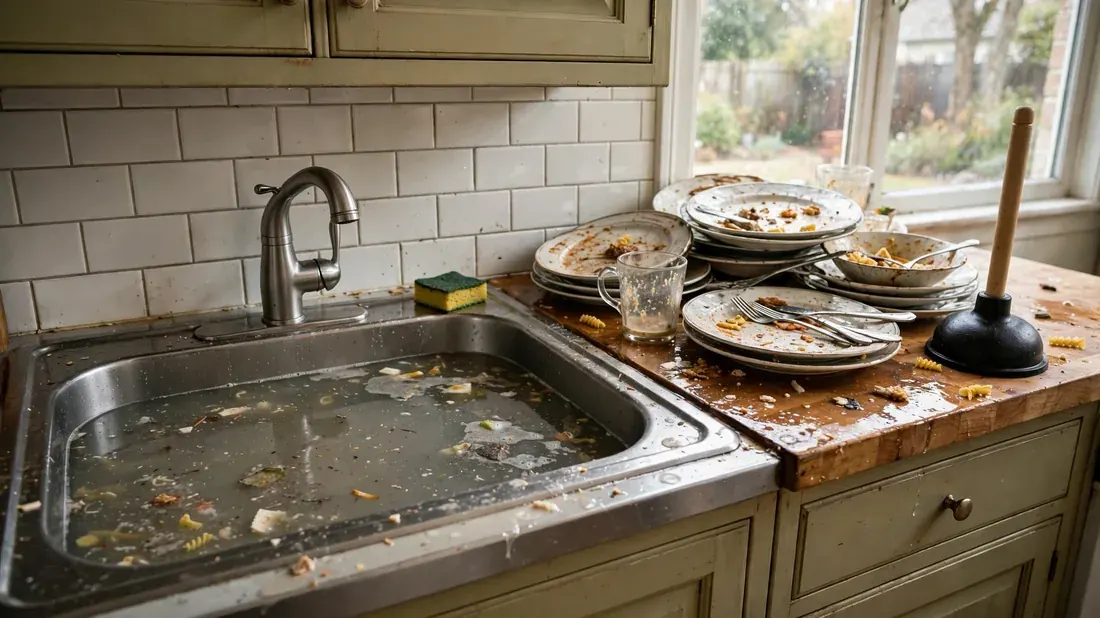
One slow drain is a nuisance. Every drain in the house running slow at the same time is a message — and the message is almost never about the fixtures. When the tub, the sinks and the toilets all start hesitating together, the restriction sits somewhere they all share: the main drain or the sewer lateral that carries everything out of the house.
In the Elizabeth and Union County corridor, that usually means an older pipe doing what older pipes do. Here is how to read the pattern, what typically causes it in this housing stock, and the point where the job stops being a homeowner's and becomes a plumber's.
Start With the Pattern, Not the Fixture
Drains are a tree: fixtures feed branch lines, branch lines feed the main drain, and the main drain feeds the sewer lateral to the street. A clog in a branch affects one fixture. A restriction in the trunk affects everything downstream of nothing and upstream of everything — which is why whole-house slowness points at the main line first.
Two details sharpen the picture. If the lowest fixtures in the house — a basement tub, a first-floor toilet — are the slowest or the first to gurgle, the restriction is likely low and central. And if flushing an upstairs toilet makes a downstairs drain bubble, air is being pushed through water that cannot move: a classic sign the main path is narrowed.
The Usual Causes in Older Corridor Homes
Root intrusion leads the list. Much of the corridor's sewer stock is clay tile pipe with joints every few feet, and tree roots find those joints. Once inside, roots catch everything that passes and build a net that thickens season by season. The drain does not stop all at once — it slows, exactly the way homeowners describe it.
Scale and sediment come second. Decades of hard use narrow cast iron from the inside, and grease from kitchen lines coats branch pipes until the opening is a fraction of what it was. A third cause is a belly — a section of pipe that has settled and sags, holding water and solids that should have kept moving.
What the Gurgling Is Telling You
Gurgling is air with nowhere to go. A healthy drain system vents air through the roof stack; when the line below is restricted, air gets pushed back through the water standing in traps, and you hear it in the lowest fixtures first.
Treat new gurgling as an early warning rather than a quirk. It typically arrives weeks before the first real backup — which makes it the easiest moment in the whole story to act, even though acting simply means getting the line looked at.
What You Can Check Yourself
Run the pattern test: fill the tub, then drain it while someone watches the lowest toilet or floor drain. Movement, bubbling or a rising level downstairs confirms the problem is shared, not fixture-level. Note which fixtures are affected and when it started — that description is gold on an intake call.
If your home has a cleanout, you can look — carefully — at whether water stands in it. Standing water in the cleanout means the restriction is beyond that point, toward the street. Do not open a cleanout that is actively backing up; that job belongs to someone with a machine and a plan.
What Not to Do
Skip the chemical drain openers when the whole house is slow. They cannot dissolve a root mass or lift a settled belly, they sit in the standing water making it hazardous, and the plumber who comes next now has to work through a line full of caustic liquid. One bottle in one sink is a household choice; repeated bottles into a failing main is how a drain problem becomes a pipe problem.
Also resist the rental snake as a first move on a main line. A cable in an old clay lateral can catch on a root joint and turn a slow drain into a stuck cable — a bigger job than the one you started with.
When It Becomes a Plumber's Job
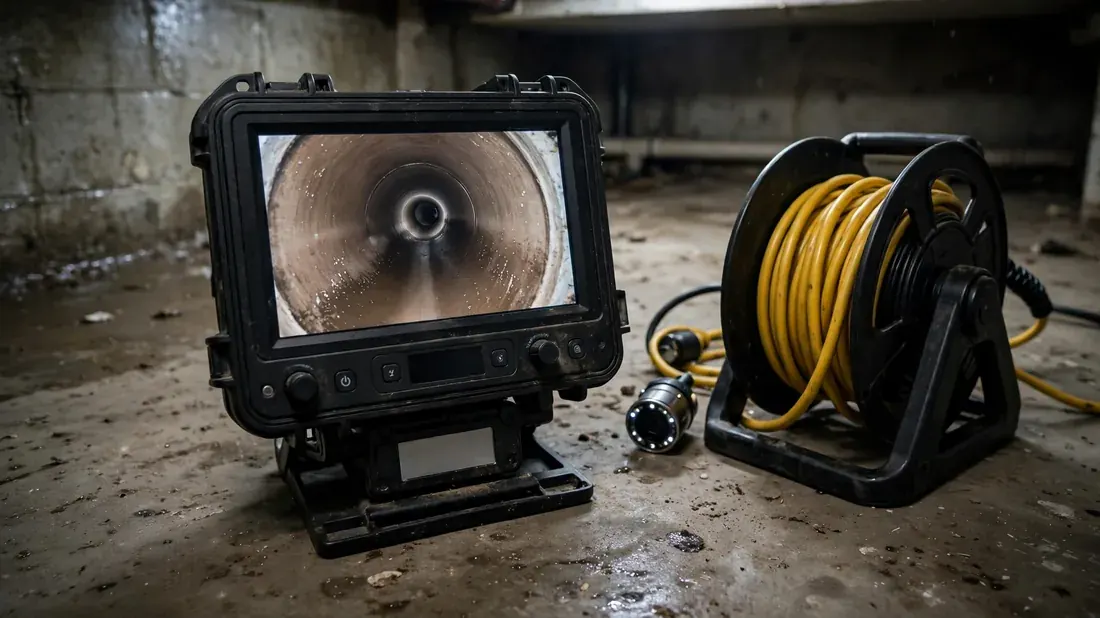
Whole-house slowness, gurgling at low fixtures, or any backup at all puts the job in a plumber's hands. The standard first step is a camera inspection: a small camera travels the line and shows, on screen, whether the narrowing is roots, scale, a belly or a break. That picture decides everything after — clearing, jetting, or repairing a section — and it replaces guesswork with evidence.
If you are in one of the 16 cities this site covers, call the intake line, describe the pattern the way this guide lays it out, and the match will go to a plumber who handles main lines. Say which fixtures gurgle. It matters more than you would think.
Get Help With Plumbing in Northern New Jersey
Guides explain the system; they do not turn a wrench. If this one ends at "this needs a plumber", call the intake line, describe what you found, and get matched with an independent local plumber who serves your city.
📞 Call Now